How Climate Resilience and ESG Are Reshaping Site Selection and Design
Key Highlights
- Developers must integrate climate resilience and ESG into site selection for new infrastructure projects.
- The building sector contributes 34% of global energy demand and 37% of associated carbon dioxide emissions.
- Investing in green, climate-resilient real estate decreases operational costs and generates higher property values.
- Site development consultants help developers integrate ESG principles by conducting crucial climate risk assessments.
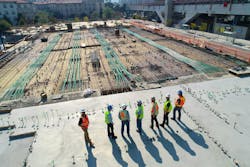

Today’s developers must take climate resilience and environmental, social and governance (ESG) responsibility seriously when deciding where to build new infrastructure. This includes considering site safety amid the potential for flooding or wildfires, and understanding how a building’s construction will impact the local community and natural world.
Discussions about climate change and ESG have taken center stage, with professionals seeking sustainability guidance from site development consultants during the early stages of the design process.
Climate Resilience and ESG in the Built Environment
A 2022 UN Environment Programme report said the building sector accounted for 34% of global energy demand and 37% of associated carbon dioxide (CO2) emissions. These statistics highlight the need to move beyond the most basic energy efficiency and adopt a holistic approach.
The risk of extreme impacts on urban systems further highlights the need for climate resilience and ESG in site selection and design. Natural disasters, including droughts, wildfires, tornadoes and hurricanes, are highly destructive and cost billions of dollars in financial losses and infrastructural damage.
Protecting your investment from weather-induced physical threats is critical. However, integrating ESG from the start delivers a more valuable and adaptable asset for decades to come. Investing in green and climate-resilient real estate is a financially sound strategy that significantly decreases operational costs, generates higher property values and lowers vacancy rates.
4 Top-Rated Site Development Consultants
By conducting climate risk assessments and determining whether a particular site is vulnerable to threats, site development consultants help developers integrate ESG principles into their project design. These four firms are among the top-rated consultants, enabling the creation of resilient and responsible developments.
1. TRC Companies
TRC Companies is an end-to-end provider of consulting, engineering and construction management services with an environmental-focused approach. Its specialists can manage projects from the initial assessment and permitting processes to building and operation.
ESG advisory is a prominent offering, featuring an experienced team to help you navigate intricate sustainability requirements. This includes developing a comprehensive ESG strategy and evaluating potential material uses. It also conducts risk screenings aligned with critical frameworks like the Global Reporting Initiative, Sustainability Accounting Standards Board and Task Force on Climate-related Financial Disclosures (TCFD).
Key features:
- Delivers environmental, engineering and construction expertise throughout the entire site development life cycle
- Dedicated ESG advisory services
- Digital and data-enabled solutions to connect ESG, ecological risk and functional engineering applications
2. Arup
Arup is an engineering and design consulting firm that aims to improve the planet through sustainable site development. It delivers a comprehensive suite of climate resilience and ESG services to help your project take off.
You can count on its experts to conduct detailed risk assessments for various climate hazards, create decarbonization strategies and oversee large-scale developments for optimal sustainability.
This provider maintains a “total design” philosophy, which entails radical collaboration and teamwork. It brings specialists in engineering, planning and sustainability together for an integrative approach to decision-making, from the project’s conception to the final result.
Key features:
- Global expertise with a localized understanding of regional challenges
- Leverages advanced climate intelligence to determine potential climate impacts and design a practical plan
- Explicitly devoted to sustainability and creating a more climate-resilient world
3. Jacobs
Jacobs aims to reinvent the future by delivering solutions to today’s most pressing challenges. It provides start-to-finish site selection and design services in manufacturing, energy, environment, cities, transportation and more. Highly skilled consultants oversee feasibility and impact assessments, project planning, design and life cycle management.
Jacobs also emphasizes digital capabilities, from data analytics to digital twins to artificial intelligence. This enables its specialists to conduct high-quality modeling, simulation and risk analysis before you ever break ground.
Key features:
- Utilizes cutting-edge technologies for climate-risk assessment and modeling
- Full-scope consultancy, design, planning and operational management services
- Takes an integrative approach to address challenges across various sectors
4. SLR Consulting
SLR Consulting is a global sustainability leader that partners with clients at each project stage, from initial planning and site assessment to designing, compliance and completion. It offers a dedicated team of experts focused on the built environment that takes a multifaceted approach to tackling the most difficult climate change challenges.
As part of its climate resilience and net-zero solutions, it performs climate scenario simulations to recognize and quantify the risks and opportunities for a specific site. Its specialists then assist you in developing the technical and engineering blueprint for resilience and adaptation.
Key features:
- Sector-specific expertise in the built environment
- Expert support in navigating environmental compliance regulations
- Complete range of services throughout the entire project life cycle
Choosing the Right Site Development Consulting Firm
Building with future climate change impacts in mind is more crucial than ever. Selecting a top-rated site development consultant will help you spearhead a sustainable design project with climate resilience and ESG goals in mind. Consider the following criteria for making the best choice:
|
Technical Expertise and Qualifications |
Consultants should possess extensive expertise in the scientific principles underlying sustainable design and engineering. Look for relevant certifications, proficiency in climate risk analysis and regulatory fluency. |
|
Evaluation Process |
Determine the measures taken for site evaluation and the integration of ESG and resilience into every project stage. Understand the tools and technologies they use to make data-informed decisions. |
|
Collaboration and Communication |
The right consultancy firm will have a diverse team of environmental, engineering, architectural and urban planning experts. They must clearly explain technical concepts concisely for a nontechnical audience. |
|
Reputation |
Ask for a portfolio of similar projects to yours, as well as verifiable performance benchmarks. These should include energy and water savings, carbon footprint reductions and various resilience improvements. Also, request references from prior clients. |
What Skills Should You Look for in a Site Development Consultant?
When vetting a site development consultant, look beyond merely the technical and engineering qualifications and focus on other essential skill sets. For instance, individuals must have fluency in climate risk assessment and the utilization of new technologies that enable them to identify vulnerabilities.
They should also understand how to report ESG and TCFD to fulfill various sustainability standards, such as Leadership in Energy and Environmental Design and Building Research Establishment Environmental Assessment Methodology.
They must be able to build a business case backed by data analytics, including long-term returns on investment and risk mitigation benefits. A skilled expert is as focused on developing a sound ESG and climate-resilient strategy as they are on identifying the issues to address.
Responsible Design for a Resilient Future
Incorporating climate resilience and ESG in site selection and design is as much about making wiser, more secure investments as it is about being responsible. Experienced consultants with a propensity for sustainability in the built environment are shaping the future.